
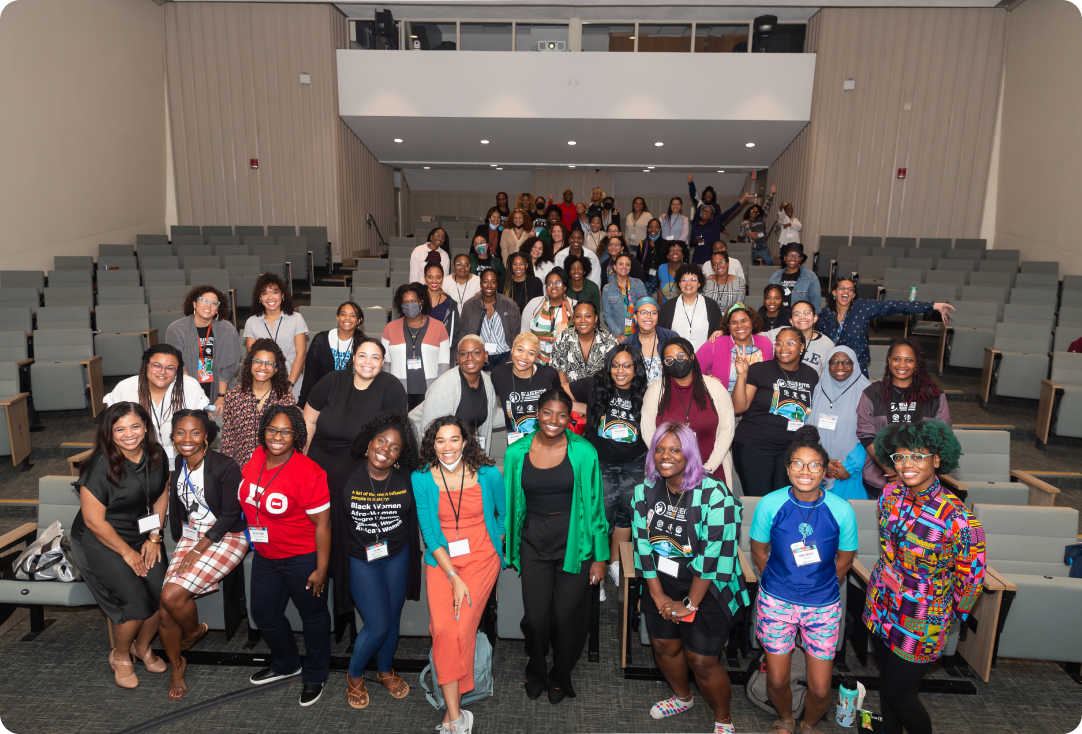
2025 CONFERENCE THEME
Empowering Innovation with Collaboration
Experience four days of inspiration, where BWEEMS members come together to amplify our voices, share groundbreaking research, and foster meaningful connections.
Don't miss this chance to be part of a movement reshaping the culture of science. Together, we'll push boundaries, elevate our community, and create a more equitable future for Black women in EEMS fields

2025 KEYNOTE SPEAKER
Wawa Gatheru
Wawa Gatheru is a Kenyan-American climate activist and founder passionate about bringing empathetic and accessible climate communication to the mainstream. Harnessing her academic background as a Rhodes Scholar and her work as a youth climate activist, Wawa’s life goal is to help create a climate movement made in the image of all of us. In 2019, Wawa was named the first Black person in history to receive the prestigious Rhodes, Truman and Udall scholarships for her environmental scholarship and activism. She is the founder of Black Girl Environmentalist, a national organization dedicated to empowering Black girls, women and gender expansive people across the climate sector. With over 2,000+ members, BGE has been recognized as one of “the largest Black youth-led organizations in the country” by Forbes. She is an inaugural member of the National Environmental Youth Advisory Council of the US EPA, the first federal youth-led advisory board in US History. Wawa sits on boards and advisory councils for Greenpeace USA, Earth Justice, Climate Power, the National Parks Conservation Association, Good Energy, and Sound Future. Wawa has been recognized for her work in outlets like the New York Times, NPR, Essence, NBC, among others, and has been recognized as a Glamour College Woman of the Year, a Forbes 30 under 30 recipient, L’Oreal Woman of Worth, a Grist 50 fixer, a Climate 100 leader by the Independent, an AfroTech Future 50, a Young Futurist by The Root, a Climate Creator to Watch by the Harvard T.H. Chan School of Public Health, a Public Voices Fellow by Yale, and was featured on the January 2023 digital cover of Vogue alongside Billie Eilish and 7 other climate activists.
2025 CONFERENCE SESSIONS
Session #1: Coral Reefs and Marine Ecology
Early Gene Expression Response to Stony Coral Tissue Loss Disease exposure in Orbicella faveolata- Lys Isma
Investigating The Global Distribution of a Dinoflagellate-infecting Virus, dinoRNAV, in Stony Corals- Joyah Watkins
Microplastic Leachate Effects on Coral Fertilization and Settlement-
Keiko WilkinsSocio-Ecological Drivers of Anthropogenic Marine Debris Effects on Coral Reef Communities- Tokea Payton
How Mesophotic Habitats Shape the Ecology and Climate Resilience of Kelp Forests in the Galapagos- Salome Buglass

Session #2: Fisheries, Aquatic Resources, and Human Impact
Evaluation of Sport Fishers' Perception Regarding Catch and Release Techniques in the Rondônia Region- Samara S. M. Cunha
Scuba Diving/Professional Dive Certifications/Marine Sciences- Andrea R. Williams
Sanctuary or Snack: What Provokes The Attack- Makeda Serju
Video documentation of the marine community using an oyster and clam farm as habitat in Barnegat Bay, NJ- Alexandria Ambrose
Socio-ecological Systems and Fishing Communities' Perceptions- Frédérique Fardin
Trophic Position and Niche Breadth Across Freshwater Fish Thermal Guilds- Cam Mosley
Session #3: Organismal Biology, Morphology, and Adaptation
Distribution of Polycyclic Aromatic Hydrocarbons (PAHs) in the surface sediments of Mwache Mangrove wetland in the Kenyan coast-
Maurine Kerubo AroriUnder Pressure, Rolling Down On Me: Female Body Shape Insights For a Hermit Crab Along the South Atlantic Coast- Valéria Vale
Abundance and distribution of mesozooplankton communities on the southern and central Mozambique shelf- Ceiça Chioze
Preference and Survival of Diamondback Moth (Lepidoptera: Plutellidae) Larvae on Pennycress (Brassicales: Brassicaceae) in Choice and
No-choice Tests- Ellen AdjeiwaaTrophic traits and phylogenetic relatedness in tropical carnivorous fish assemblages- Myrna Elis Ferreira Santos
Ontogeny of Sexual Size Dimorphism in Juvenile Northern Elephant Seals (Mirounga angustirostris)- Madeleine R. Stewart
Session #4: Geosciences, Communication, and Applications
New Insights into Holocene Evolution North of the Mouth Amazon River, Maritime Basin of the Amazon River Mouth- Kerly A. Jardim
Visual Health Assessment of Tamanend's Bottlenose Dolphins (Tursiops erebennus) in Albemarle Sound, North Carolina- Zora Beaty
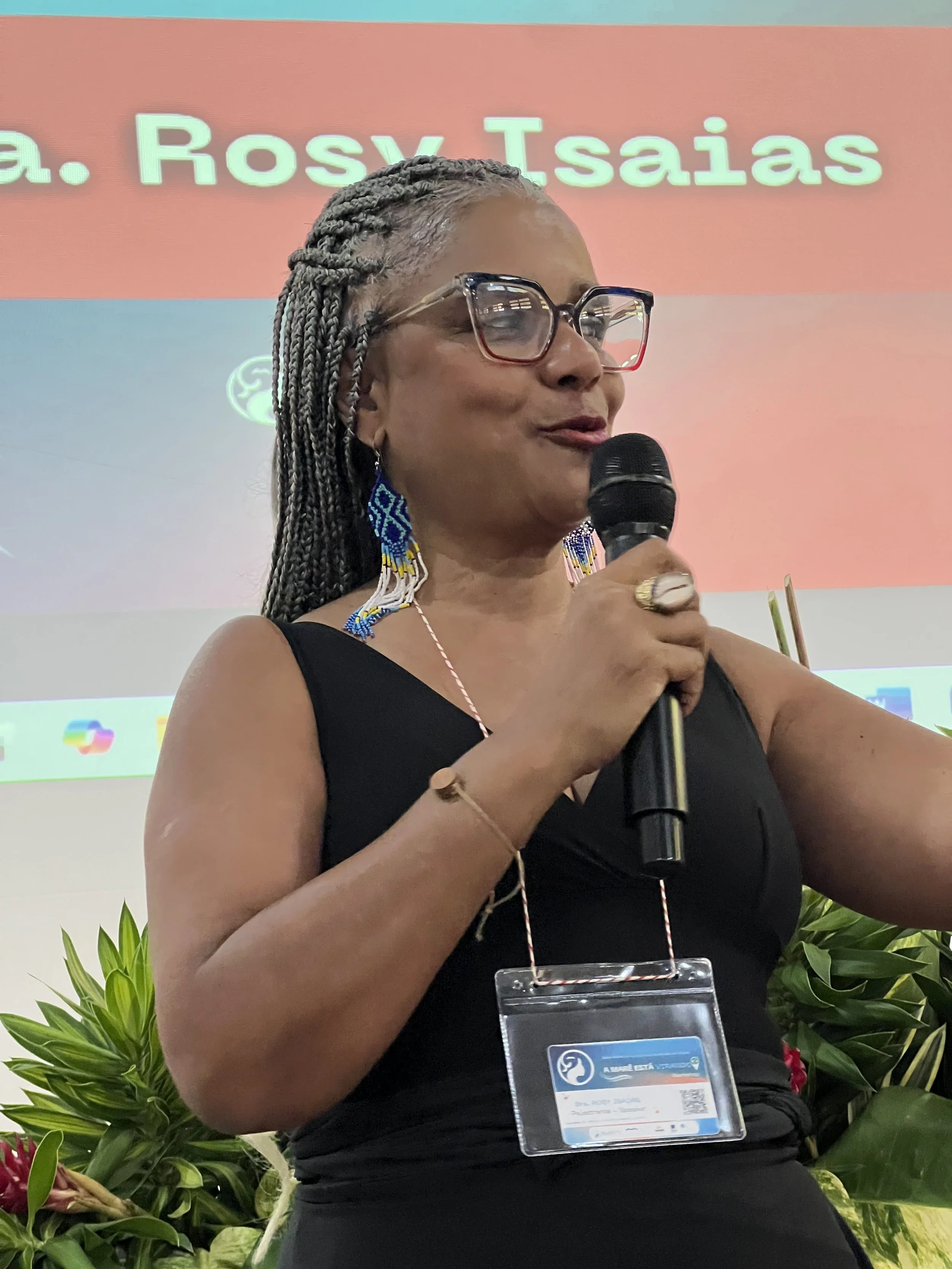
How to be a gall and survive the stress- Rosy Isaias
The Power of Visual Communication- Andreah Pierre
From Biotechnology to Biomonitoring: eDNA as a Comprehensive Tool for Marine Ecosystems- Jeanette Davis
Lightning Talks
Temporal patterns of a small multi-focal swollen pink spot outbreak on the massive stony coral Porites spp. in Mo’orea- Ashlyn Ford
Reef Types Reveal Intra-and Interspecific Variation in Functional Traits of Dominant Coral Reef Macroalgae in the South Pacific-
Shalanda GrierPlastic Nests: The First Record of the Yellow-rumped Cacique (Cacicus cela) and the Great Kiskadee (Pitangus sulphuratus) Building Nests With Discarded Fishing Material on the Amazon Coast- Raqueline Monteiro
Can watershed biodiversity and geodiversity be used to explain the ecophysiology and life history of salmonids?- Peyton A. Thomas
From Shells to Scales: How Materials and Biocides Shape Aquatic Life- Brittney L. Mitchell
Fundulus escambiae, Testing the Species Hypothesis- Adania Flemming
Trailblazers in Nature: Rediscovering African American Legacy in Conservation- Sharon Dorsey
Investigating the Diversity and Function of Microorganisms in Serpentine and Non-Serpentine Soils across California- Allie Igwe
Addressing Country-level Greenhouse Gas Inventorying Needs through the Stewardship and Communication of Coastal Carbon Data-
Jaxine WolfeA case study on changes in the soundscape of Baía da Ilha Grande during the COVID-19 pandemic- Keila Zaché
Using eDNA as an Investigative Tool for Natural and Artificial Oyster Reefs in the Hampton River- Zuri Murph
Exploring Soil Microbial Evolution to Experimental Soil Warming and Freeze-Thaw Cycle Events- Megan Mitchell
Plant Growth and Local Adaptation Response to Automobile Nitrogen Pollution in the Los Angeles Basin- Sacha Medjo-Akono
Population structure of Capsella bursa-pastoris in the United States of America- Maya Wilson Brown
The Influence of Close Proximity to Human Activity on Chromis Viridis Antipredator Behavior- Anisa Sellers
Fish Fries & Fishing for Food: Cultural Traditions among African Americans on the Southeastern Coast of North Carolina- Ariella Chukwuma
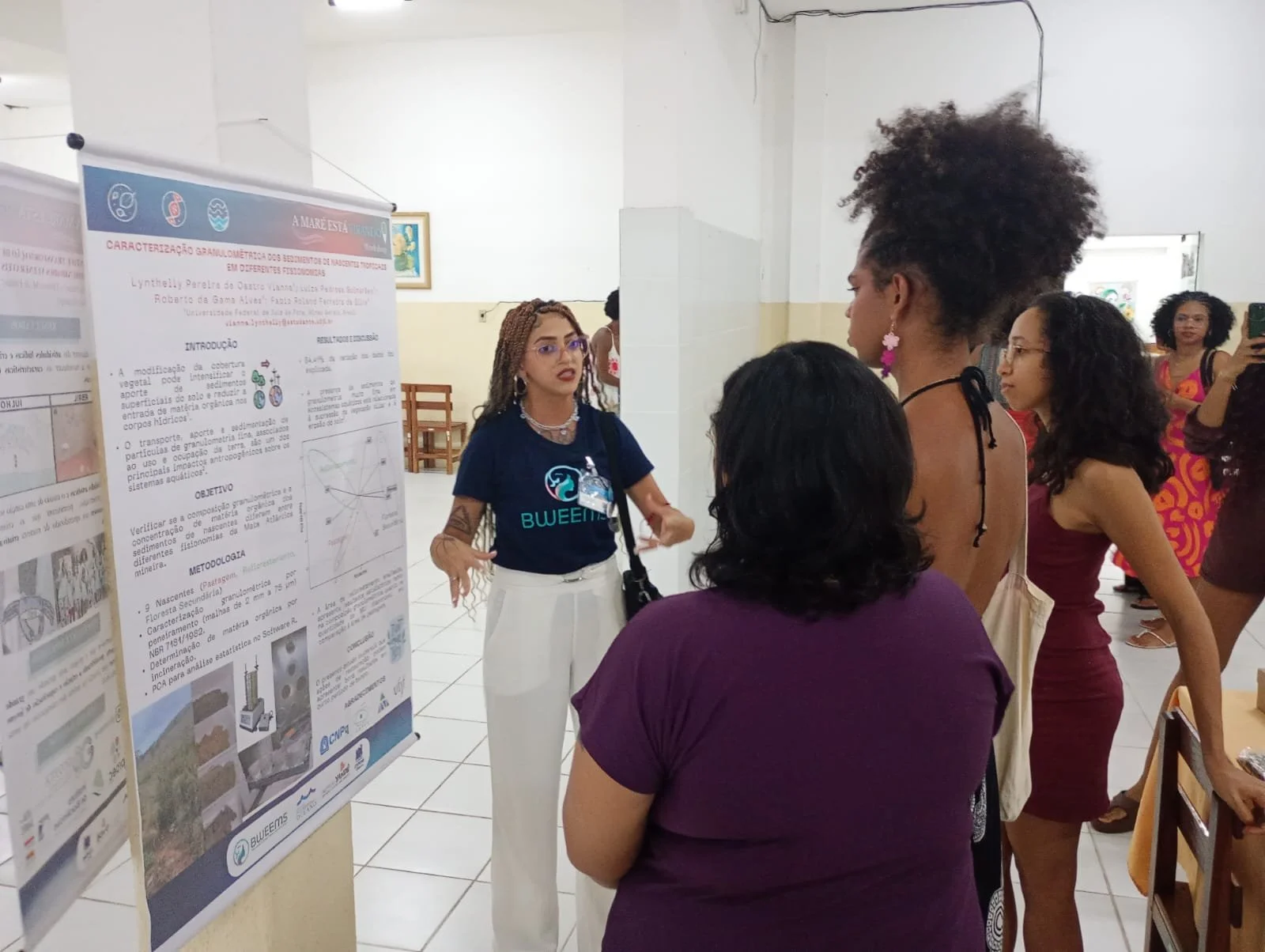
Poster Session
Quantifying Mass Transfer Rates in Uniformly Dissolving, Freely Moving, Inertial Particles For Chemotaxis Applications- Theresa Oehmke
Tourism In Protected Areas: Impacts On Coastal-Marine Environments-
Jaiane Nascimento da SilvaAssessing Impacts of Trawling on Species and Habitats Within Biscayne Bay, Florida- McKenzie Zapata
Bacteria, We Can See Your Halo: Analysis of Chitinase Genes in Bacteria Collected from the Skin of Four Amphibian Species in Virginia- Mychala Snead
Key Trends in Agroforestry Resilience to Hurricanes: What Should We Be Researching?- Mariam Hamzat
Evaluation of Sport Fishers' Perception Regarding Catch and Release Techniques in the Rondônia Region- Samara Suzi Moura Cunha
The filogeography of Compsura heterura Eigenmann 1915 (Characiformes: Cheirodontinae) in Two Neotropical Ecoregions- Elizia Montenegro
Fine Scale Morphological Variation of the Aboral and Oral Surface Endoskeleton of Hybridizing Asterias Species in New England and Potential Consequences- Angela Jones
Pond to Polymer: Environmental Impact of Tire Wear Particles: A Study in Lithobates catesbeianus Tadpoles Accumulation and Depuration- Beija Gore
Where the Bubbles Descend: Uncovering the Amphipod Sanctuary of the Saint Peter and Saint Paul Archipelago- Silvana Siqueira
The Microbial Diversity of Corals Affected by Treated Wastewater in the Kahekili Beach Area- Makeda Mills
Habitat Structural Complexity Influences Anti-predatory Behavior of the Herbivorous Reef Fish, Acanthurus nigrofuscus- D'Karia Bascom
Today There Is A Party And Lots Of People in the Hall: Epitoquia de Laeonereis cf. acuta in the Rio Pardo estuary- Natalia Santos Silva
What Is The Effect Of Nutrient Enrichment Associated With Increased Temperature On Siderastrea stellata Colonies At Different Health Stages?- Aline Silva
eDNA as a tool to assess biodiversity in sediment samples associated with oyster restoration in the Hampton River- Jahlen Pinelo
Quantifying Decadal Scale Shifts in Key Coral Reef Symbiont Assemblages- Taylor Walker
The Impact of Ocean Acidification on the Growth and Shell Integrity of Crassostrea tulipa in West African Estuaries- Gabriella Akpah Yeboah
Mussels Enhance Digestive Enzyme Activity in Preparation for Stressful Fluctuating Environments- Jordan James Bond